
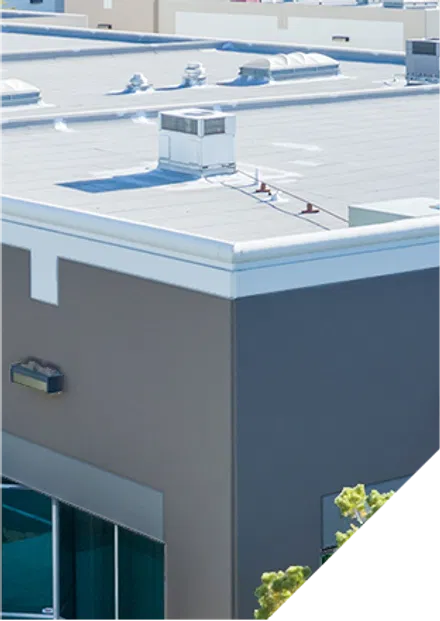
Is your commercial roof approaching 15 years old, and are you worried an insurance notice could arrive before you have the budget for a full replacement?
You’re not alone, folks.
Across Texas, commercial property insurers are looking more closely at aging roofs. Around the 15-year mark, many carriers begin requesting inspections, changing replacement-cost coverage to actual-cash-value coverage, increasing premiums, or requiring documented repairs and maintenance.
By 20 years, the pressure can become even more serious: non-renewal, roof exclusions, higher deductibles, or a demand for replacement.
Here’s the kicker: there is no single Texas law that automatically makes a commercial roof uninsurable at 15 or 20 years. These decisions vary by carrier, policy, roof type, condition, location, and claims history. But the underwriting trend is real, and waiting for the notice can leave your business scrambling.
A professionally applied NanoTech® Cool Roof Coat may give a structurally sound commercial roof a practical path forward at roughly 10–15% of the cost of a new roof, depending on the building and scope of work.
It is not a guarantee of coverage. But with the right inspection, repairs, documentation, and communication with your insurance agent, roof restoration may help satisfy a carrier’s requirements while buying valuable time.
Why the 15–20-Year Mark Has Become a Commercial Insurance Trigger
Insurance companies are not only asking, “How old is the roof?”
They are also asking:
- What condition is the roof in today?
- How much remaining useful life does it have?
- Has it been professionally inspected?
- Are there active leaks, ponding water, failed seams, or damaged flashing?
- Has the owner maintained and repaired it?
- Is there documentation, including photos and inspection reports?
- Is the roof still eligible for replacement-cost coverage?
At around 15 years, many commercial property owners encounter one or more of the following:
- A required roof inspection before renewal
- A switch from replacement cost to actual cash value, minus depreciation
- Higher premiums or wind and hail deductibles
- Required repairs, maintenance, or roof restoration
- A conditional renewal
- A request for documentation showing remaining useful life
At 20 years and beyond, some standard-market carriers may refuse to write the property, exclude portions of roof damage, or issue a non-renewal notice.
The Texas Department of Insurance explains the difference between replacement cost and actual cash value: replacement cost is based on current repair or replacement pricing, while actual cash value subtracts depreciation for age and wear.
That difference can become a VERY expensive problem after a storm.
The ACV Problem: Why an “Insured” Roof May Still Leave You Short
Imagine your commercial roof would cost $250,000 to replace today.
If the policy provides replacement-cost coverage, the claim may be settled based on current construction costs, subject to policy terms, deductibles, and conditions.
But if the roof has been moved to actual cash value, the insurer may subtract years of depreciation. You could receive substantially less than the amount needed to install a compliant, modern roof.
That leaves the building owner responsible for the gap, often while also paying for interior damage, tenant claims, temporary operations, and business interruption.
And if coverage is canceled or non-renewed before a storm, the financial exposure becomes even greater.
Why wait for the insurance company to discover your roof’s age before you build the file?
The Real Cost of a Rushed Roof Replacement
A forced replacement is not just a roofing invoice.
It can create a full-scale disruption across your operation:
Major capital outlay
A new commercial roof may require hundreds of thousands of dollars, depending on square footage, materials, insulation, access, drainage, code requirements, and existing roof conditions.
Emergency pricing
When a carrier gives you a short deadline, you lose negotiating power. Contractors may charge more for accelerated scheduling, material availability, and overtime labor.
Business interruption
Roof replacement can interfere with manufacturing, inventory storage, customer access, parking, loading zones, and daily operations.
Tenant disruption
For owners of retail centers, warehouses, office buildings, and industrial properties, construction can create noise, access problems, safety concerns, and tenant frustration.
Less time to compare options
Instead of evaluating repair, restoration, coating, or replacement based on engineering and long-term planning, you may be forced into the fastest available solution.
That is why commercial roof maintenance should be treated like capital planning, not an emergency reaction.
The Automotive Analogy: Maintenance Is Cheaper Than an Engine Swap
Think about a work truck.
You change the oil, inspect the tires, replace worn belts, and address warning lights because routine maintenance is far less expensive than replacing the engine on the side of the highway.
Your commercial roof works the same way.
A professional inspection, seam repair, drainage correction, and protective coating can be the equivalent of a major maintenance service. A complete tear-off and replacement is closer to an engine swap.
Neither maintenance nor coating can save a vehicle with a destroyed engine. And a roof coating cannot save a roof with failing structure, saturated insulation, or widespread deterioration.
But when the existing roof system is still structurally sound, restoration may help protect the asset and delay a much larger expense.
How NanoTech® Cool Roof Coat Can Support a Roof Restoration Plan
NanoTech® Cool Roof Coat is designed for commercial properties, including many flat and low-slope roof applications.
It is not simply white paint.
The acrylic polymer technology is designed to emit approximately 94% of heat away from the roof, while its low thermal conductivity helps reduce heat transfer into the building. In plain English, it is built to do more than reflect sunlight. It helps keep heat from traveling through the roof assembly.

Depending on the roof system, weather, building design, and application, the reported benefits include:
- Roof temperature reductions of approximately 50–70°F
- HVAC use reductions of up to 45%
- A minimum 10-year roof-life extension when properly applied to a suitable roof
- A 10-year rolling warranty
- A more energy-efficient roof surface during brutal Texas summers
The potential financial advantage is significant. A coating project may cost roughly 10–15% of a full roof replacement, though actual pricing depends on roof size, repairs, access, materials, drainage, and preparation.
The goal is not to pretend the roof is new. The goal is to professionally restore and protect a roof that still has a sound foundation.
Learn more about commercial flat roof coatings and roof restoration in Texas.
What the Right Insurance-Friendly Process Looks Like
WRONG: Wait for the non-renewal letter
By the time your carrier gives you 30 or 60 days to correct a roof issue, your options may be limited.
RIGHT: Start 6–12 months before renewal
Give your agent, broker, and roofing contractor time to inspect the roof, identify problems, complete work, and assemble documentation.
WRONG: Roll on inexpensive coating over an unprepared roof
A coating applied over dirt, loose material, failed seams, active leaks, or trapped moisture may fail prematurely. It may also create problems with warranties or insurer approval.
RIGHT: Inspect, repair, prepare, and document
A professional roof restoration plan should address:
- Roof condition and construction
- Active leaks and damaged areas
- Seam, flashing, and penetration details
- Drainage and ponding water
- Saturated insulation or structural concerns
- Surface preparation
- Coating thickness and application
- Before-and-after photographs
- Remaining useful-life expectations
- Warranty and maintenance requirements
At Texas Roof Magic, we use CompanyCam to provide progress photos and project documentation. That creates a digital record you can share with your facility team, ownership group, lender, or insurance agent.

When a Cool Roof Coating Is NOT the Answer
We want to be direct: NanoTech® Cool Roof Coat is not an alternative to roof replacement when the roof has already failed.
A coating may not be appropriate when the roof has:
- Failing structural decking or framing
- Widespread membrane deterioration
- Saturated insulation
- Severe or recurring leaks
- Extensive unrepaired damage
- Persistent ponding caused by unresolved drainage problems
- Conditions that prevent proper adhesion
- A roof system at the end of its practical service life
In those cases, repairs, partial replacement, full replacement, or an engineer’s evaluation may be the responsible path.
A coating is a cooling and protection system for a suitable existing commercial roof, not a magic cover-up.
Talk to Your Insurance Agent Before Work Begins
Coverage decisions vary by carrier and policy. A coating that helps one property satisfy an underwriting requirement may not meet another carrier’s standards.
Before starting work, ask your agent or broker:
- What roof age triggers an inspection?
- Is the roof currently covered at replacement cost or actual cash value?
- Does the carrier require a specific inspection format?
- Will the carrier accept a professional coating or roof restoration?
- Does the carrier require a warranty, licensed contractor, or engineer’s report?
- What repairs must be completed before renewal?
- Are wind and hail losses limited or excluded?
Then request those requirements in writing.
Your roofing contractor can help provide condition reports, photographs, repair records, coating details, warranty information, and remaining-life documentation. Your insurance professional makes the coverage decision.
Key Takeaways for Texas Commercial Property Owners
- The 15–20-year range is an important underwriting window for many Texas commercial roofs.
- Insurers may evaluate age, condition, remaining useful life, inspection reports, maintenance history, and documentation.
- Mid-term cancellation and non-renewal risks vary by carrier and policy, but waiting can create unnecessary pressure.
- A rushed replacement can cause major capital expense, emergency pricing, business interruption, and tenant disruption.
- A professional roof coating may cost roughly 10–15% of replacement and may help satisfy carrier requirements when the roof is structurally sound.
- NanoTech® Cool Roof Coat can extend roof life by a minimum of 10 years, emit approximately 94% of heat away from the roof, reduce roof temperatures by 50–70°F, and cut HVAC use by up to 45% in suitable applications.
- A coating is NOT the answer for a failing structure, saturated insulation, or a roof beyond restoration.
- Always speak with your insurance agent early and confirm the carrier’s requirements before beginning work.
Protect Your Building Before the Insurance Clock Runs Out
Your roof is not just overhead protection. It is a major capital asset, and insurance companies are paying closer attention to it every year.
If your commercial or industrial roof is approaching 15 years old, don’t wait for a cancellation notice or a rushed replacement demand. Texas Roof Magic can help you understand your roof’s condition, identify whether restoration is appropriate, and create the documentation needed for a more informed insurance conversation.
Contact Texas Roof Magic for help protecting your commercial roof. We’ll give you a straightforward assessment, explain your options, and help you make the next move with confidence.